

(Source: RA Ice Breakers)
Throughout my life, I’ve always dreaded the first day of school because I knew the agenda would likely include an icebreaker. While the intention of icebreakers is to loosen the newness tension, it incites a nausea-inducing panic in me every time.
When an icebreaker is announced, the following thoughts occur:
– How do I escape?
– Please don’t be a physical activity. OMG I see balls. It’s physical.
– Please don’t ask us to remember everyone’s names.
– Please don’t ask the group to arrange by height.
– Should I just imply I have diarrhea and leave? Is that a valid excuse? Do I really want to start of this year with TMI?
After a few cycles of anticipating the worst-case scenario, I eventually accept the potential of impending doom and stop planning my escape.
There are generally two categories of icebreakers: physical and sharing emotions. I don’t mind sharing emotions, but I do cringe when it comes to physical activities. It bothers me because physical icebreakers usually accompany a wave of horror for the facilitator when they realize it’s a difficult activity for someone with a physical disability.
Two of my leadership courses this year have formatted their curricula to begin each class with icebreakers. This reality initially felt like prolonged exposure therapy. At 31, I suppose it’s time to confront these fears as I figure out the root of my icebreaker anxiety.
Last week, we had our first icebreaker. It was a very creative activity involving a beach ball with various questions. We gathered in a circle and tossed the ball to someone in the group. Upon catching the ball, we were asked to answer a question that fell near our right thumbs. It effectively allowed us to get know each other on a personal level. Although the answers were insightful, I wasn’t able to remain present, as I was so fixated on the likely awkwardness of when the ball was thrown my way. As expected, the ball slammed me in the face because I lack the ability to catch things gracefully. I was embarrassed and took my usual route of interjecting humor in place of discomfort. I shared my answer and passed it over to the person next to me (I also lack field perception required to throw balls).
I’m not a delusional narcissist who expects everyone to be cognizant of my physical parameters and plan activities accordingly. I’m an adult. While I do feel we may want to be more aware of these factors when working with children, it can be awkward to assume capabilities in adults. It’s challenging for anyone to maintain 100% inclusivity. As an adult with a disability, I feel it’s imperative to self-advocate as it allows my needs to be met at least halfway. This time, however, I chose to ride it out because a classroom is a safe space to learn and figure out why icebreakers induce anxiety.
At a certain point, I stopped caring about the possibility of embarrassment if I couldn’t catch the ball. Who cares?! I reminded myself that I wasn’t in Physical Education in elementary school anymore. No one is going to tease me for years and bring up “that time” throughout my life. It was interesting to have that revelation because I was a bit closer to realizing the root of my icebreaker anxiety.
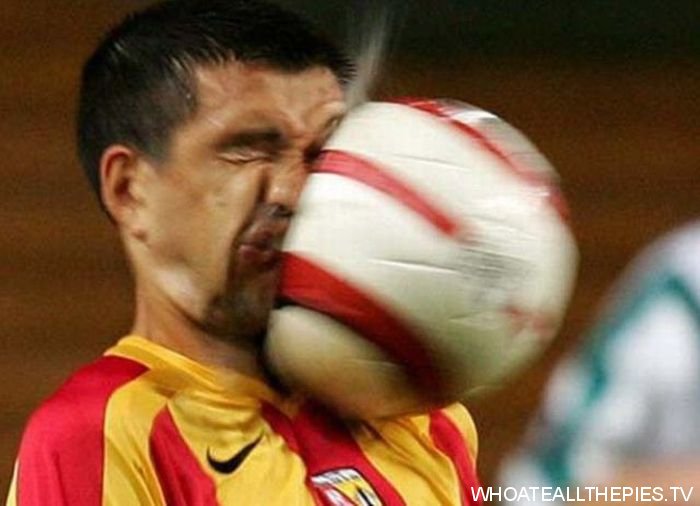
The Evolution of Ball Anxiety
(a likely precursor to current icebreaker anxiety)
In the late 80s/early 90s, the public school system was in transition to include students with disabilities in regular education classrooms. I imagine it was challenging for the administration as they were figuring out how to be inclusive and dodge liability at the same time. In an effort to give me the “full experience”, I was required to participate in Physical Education (PE) until I was in second grade. My PE teacher was wonderful. He worked with me to adapt activities and created a safe space to communicate what I could and couldn’t do. As a child who grew up in a culture of “respecting authority”, I didn’t want to disappoint my teacher and tried my best to try new things (even if I knew it would lead to disaster). I also desperately wanted to be “normal”.
At the time, I didn’t use a walker and required someone (usually another student) to hold my hand when I walked (to the bathroom, to the cafeteria, etc.). One of the most memorable PE activities was dodge ball. Since it didn’t require running, it seemed like a viable option. Unfortunately, we immediately discovered I had a hand-eye coordination delay and a difficulty to dodge balls. Imagine being chained to a wall and having several rubber balls being thrown in your direction, many of them hitting you in the face as all of your peers laugh hysterically and try even harder to hurt you. That’s how I felt. It was my last memory of PE because someone realized Physical Therapy (PT) would be more suitable. While I was no longer required to take PE classes, my Ball Anxiety (BA) has lived with me ever since. My BA is also the reason I don’t enjoy the beach (volleyball, OMG NO), the park (more balls) and sporting events (my face would be the one to catch a foul ball).
Now what?
It’s helpful to understand the likely trigger associated with icebreaker anxiety. Being able to identify a few reasons I dislike icebreakers may be allow me to heal and maybe (very strong maybe) enjoy the experience of icebreakers in the future. As I enter my final year in the Master of Social Work (MSW) program, I’ll have several opportunities to warm up to icebreakers. I’ll be able to develop coping mechanisms (that don’t involve BM fables) to soften my discomfort. Like most habit-forming intentions, it’ll take some time to align with a new structure of icebreaker perception.


